Eight Tracks, One City: Why the Local Compilation Refuses to Die
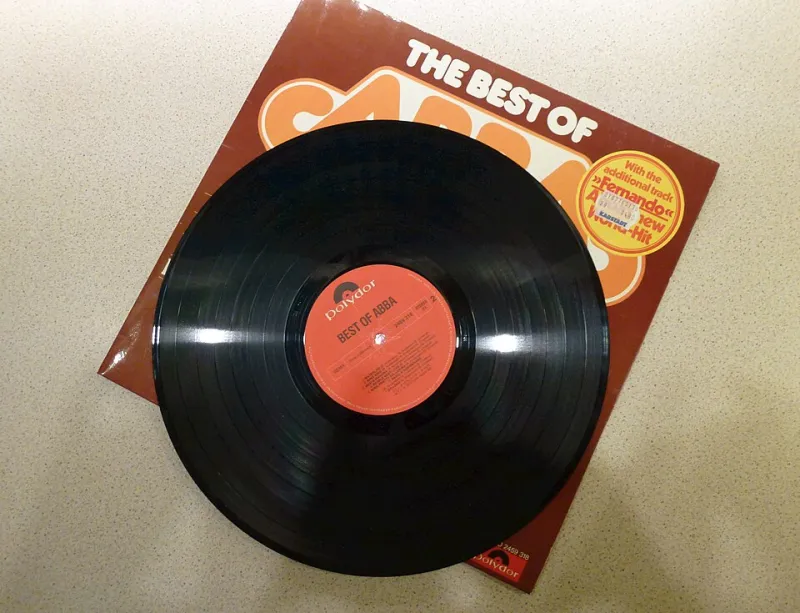
Photo: Holger.Ellgaard, CC BY-SA 4.0, via Wikimedia Commons
The compilation is a stubborn format. It has been declared dead roughly every time the music industry has had a wobble, and yet every few months another one lands: twelve tracks, one city, a sleeve designed by somebody's mate, a launch night above a pub. It shouldn't work. It works.
Part of the appeal is that the compilation makes an argument. A playlist is a queue. A compilation is a claim — these artists belong in the same room, this is what this place sounds like right now, this is what we've been telling you about. That's a much braver thing to put your name to, and it's why so many of them are being made again.
The single stopped being a front door
The received wisdom of the last decade was that you release constantly and let the algorithm decide. One track at a time, never wait, never build to anything. And it worked, more or less, for the handful of people it worked for. For everyone else it produced a peculiar kind of amnesia: a career made of singles with no shape, no context, and no reason for anyone to remember where you came from.
A compilation is a corrective. It puts a new artist next to a better-established one and lends them credibility they couldn't buy. It gives a promoter something physical to sell at the merch table. And crucially, it gives a listener a reason to care about a place rather than a feed.
The economics are grim and entirely survivable
Let's be unromantic about the numbers, because this is where most compilations fall apart.
You've got licensing to sort (a one-page agreement is fine if it's clear), mastering that has to make twelve wildly different mixes sound like they share a planet, artwork, and pressing. Vinyl lead times have improved from the worst of it but they're still measured in months, not weeks, and you're paying upfront. Three hundred copies at a decent spec is not a small gamble for a label that exists in someone's spare room.
So the money has to come from somewhere sensible: pre-orders before you commit, sale-or-return with local shops (they'll take a box if they know you and if you'll collect what doesn't shift), a launch gig that doubles as the marketing budget, and — this is the unglamorous bit — actual grant applications. Arts Council project funding, council cultural pots, a university partnership, a local independent brewery that wants its logo on the back. None of it is noble. All of it is normal.
And pay the artists. Even if it's £40 and a couple of copies each. A split that's small but real is the difference between a scene project and someone using your track as free content.
The trap: flattening the thing you're documenting
Here's where local compilations tend to go wrong, and it usually isn't malice.
Curation-by-group-chat pulls in the same six names who already get the gigs, because those are the people everyone knows. The result is a record that sounds like a screenshot of a scene rather than the scene itself — polished, coherent, faintly bloodless, and utterly interchangeable with the equivalent record from any other city.
The other version of the trap is the opposite: chasing a 'regional identity' so hard that the record becomes a costume. A city gets reduced to a genre, a genre gets reduced to three signifiers, and everyone making anything else gets politely left off.
The fix is boring and effective. Pick a scene small enough that people will argue about it. Have one person curate and a few others advise, so the record has a point of view rather than a committee. Dig deliberately for the artist who plays once a month to thirty people and has never posted a clip. Put a track on the record that nobody would have chosen, and stand behind it.
What makes one land
- A launch that's a gig, not a press release. Two floors, four acts, the comp on the door for a fiver under face value.
- Press what you'll sell. A hundred extra copies in a cupboard is a hundred copies of evidence that you got the run wrong.
- Write the sleeve notes. Actual words. Who these people are, what the venues were called, why this exists. In a decade that paragraph will be the most valuable thing on the record.
- One track per artist, no exceptions. It's a window, not a career retrospective.
- Don't call it a movement on day one. Movements are named by other people, later, usually with a slightly unkind tone.
Why it matters beyond the twelve tracks
A compilation is cheap entry into a world for a new artist. One track on a £12 record, shared with eleven others, reaches more people than most self-funded debut singles and costs the artist nothing but a WAV and a bit of patience. For a listener, it's a way into a local scene without having to guess which of forty basement nights is worth the bus fare.
And then there's the long game. In fifteen years, someone will pull this out of a charity shop bin, look at the sleeve notes, and find out that their city used to have a venue they've never heard of and a band that never made it out of the county. That's not nostalgia. That's the archive doing its job, and nobody's building it except the people doing it themselves.
So yes — eight tracks, one postcode. Make one. Just don't lose the postcode in the edit.