Fields Over Postcodes: How Britain's Regional Festivals Are Stealing the Spotlight
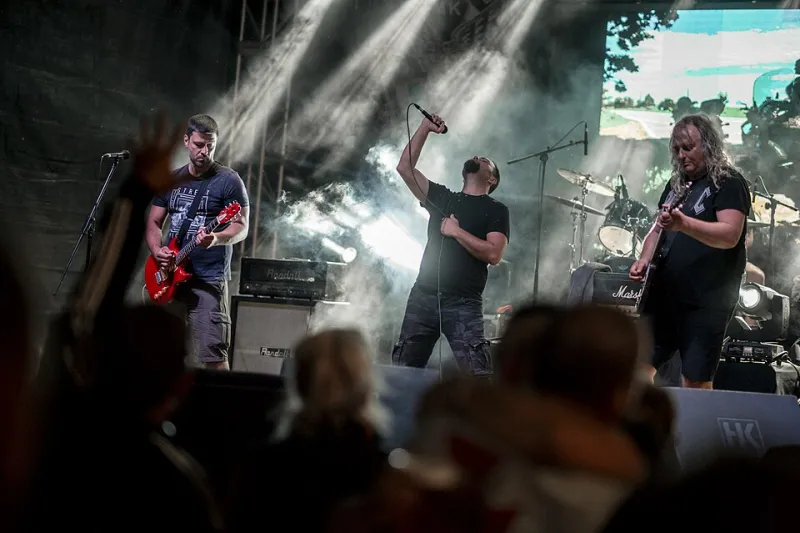
Photo: Shixart1985, CC BY 2.0, via Wikimedia Commons
There's a particular kind of magic that happens when you're standing in a field somewhere in mid-Wales, watching a band you've never heard of absolutely tear the roof off a tent that technically doesn't have one. No algorithm sent you there. No playlist pre-approved the moment. You just wandered in, and something clicked. That feeling — increasingly rare in an era of curated discovery — is exactly why Britain's regional festival circuit is having what can only be described as a proper moment.
While London's cultural gravity has long pulled the industry's attention southward, something is shifting. The festivals that are generating genuine buzz, breaking new artists, and attracting international press aren't necessarily the ones with the biggest postcodes. They're the ones with the most personality.
Green Man and the Art of Getting It Right
Green Man Festival, nestled in the Brecon Beacons in Powys, Wales, has spent the better part of two decades doing things its own way. It's never tried to be Glastonbury. It's never chased the mainstream booking strategy of stacking the bill with whoever's currently dominating streaming charts. And that restraint — that genuine curatorial confidence — has turned it into one of the most respected festival brands in Europe.
What Green Man does exceptionally well is create a context for music. When you book an artist for Green Man, you're placing them within a very specific cultural conversation — one that values craft, oddness, and sincerity over spectacle. That's an increasingly rare thing to offer, and artists know it. Word travels. Emerging acts often cite a Green Man slot as a genuine milestone, not just a tick on a touring schedule.
The festival's Einstein's Garden stage — dedicated to science, ideas, and performance art — is a useful symbol of the broader philosophy at play. This isn't just a music event. It's a cultural space that happens to have incredible music in it.
Latitude and the Literary Crossover
Over in Suffolk, Latitude Festival has been quietly building something equally distinctive. Held annually in Henham Park near Southwold, Latitude carved out its niche early by blending music programming with literature, theatre, comedy, and spoken word. It sounds like it shouldn't work. In practice, it's produced some of the most genuinely surprising festival lineups in the country.
The crossover between literary culture and music is something London has always claimed ownership of — the bookshop gig, the literary salon, the poetry night above a pub in Hackney. But Latitude has demonstrated that this kind of intellectual-creative fusion doesn't need a Zone 2 postcode to thrive. In fact, removing it from the city strips away a layer of self-consciousness that can sometimes make those London events feel a bit performative.
The audiences Latitude attracts are notably mixed — in age, background, and geography. That diversity feeds back into the atmosphere, which in turn shapes what artists feel they can do on those stages. There's a generosity to the crowd that encourages experimentation.
Why Regional Means International Now
Here's the thing that often gets missed in conversations about the London-versus-everywhere-else dynamic: regional festivals have become genuinely international destinations. Green Man pulls visitors from Germany, the Netherlands, Scandinavia, and North America every year. Latitude has a loyal European following. End of the Road Festival in Dorset — another fiercely independent operation — is regularly cited by American music journalists as one of the best festivals on the planet, full stop.
This international appeal isn't accidental. It's partly a product of the very qualities that make these events feel different from London's more commercial offerings. There's a sense that you're getting access to something real, something that hasn't been packaged for mass consumption. In a global culture increasingly dominated by the same handful of streaming-friendly sounds, that authenticity is genuinely valuable.
Major labels have noticed. A&R teams that once spent their summers almost exclusively at Camden venues and Brixton showcases are now sending people to fields in Shropshire and tents in Fife. The pipeline from regional festival stage to label interest has shortened considerably over the last five years.
The Democratisation Question
All of this raises a bigger question about what's actually happening to British music culture, and whether the capital's traditional role as gatekeeper is genuinely weakening.
For decades, the standard narrative was straightforward: you build a buzz in your local scene, you move to London, you get picked up. The industry was concentrated in a handful of postcodes, and if you weren't in those postcodes, you were at a disadvantage. That geography shaped everything — who got seen, who got signed, whose aesthetic became the dominant one.
The regional festival renaissance is one piece of a larger puzzle that also includes the rise of streaming (which doesn't care where you're based), the growth of regional studio infrastructure, and a broader cultural shift in which London's cultural authority — while still significant — is no longer assumed. Artists from Sheffield, Bristol, Glasgow, and Swansea are building international careers without ever relocating to the capital. The festivals are both a symptom and a cause of that change.
What This Means for Emerging Artists
If you're a new artist trying to figure out where to focus your energy, the regional festival circuit offers something London's venue scene often can't: context, community, and genuine discovery culture. Getting on the right regional festival bill — even on a smaller stage — can put you in front of an audience that's actively looking for something new, rather than an audience that's there primarily for the headliner.
The bookers at these festivals are also, generally speaking, music obsessives rather than industry operators. They're selecting acts because they genuinely believe in them, not because a manager sent a compelling one-sheet. That distinction matters more than it might seem. Artists who come up through this circuit tend to have a stronger sense of their own identity, because they've been encouraged to develop it rather than sand down their edges for commercial palatability.
The View From the Field
Standing in that Welsh field, watching that band you've never heard of — that experience is, in its own small way, a political act. It's a vote for a version of British music culture that isn't entirely organised around the capital's priorities, its aesthetics, or its commercial logic.
The regional festival renaissance isn't a rejection of London. It's a reminder that Britain's musical identity has always been plural, always been rooted in specific places and specific communities. The best festivals understand that. They don't try to replicate what happens in the city — they offer something the city genuinely can't.
And right now, the world is paying attention.