Too Polite to Be Honest: The Real Reason British Creative Partnerships Keep Imploding
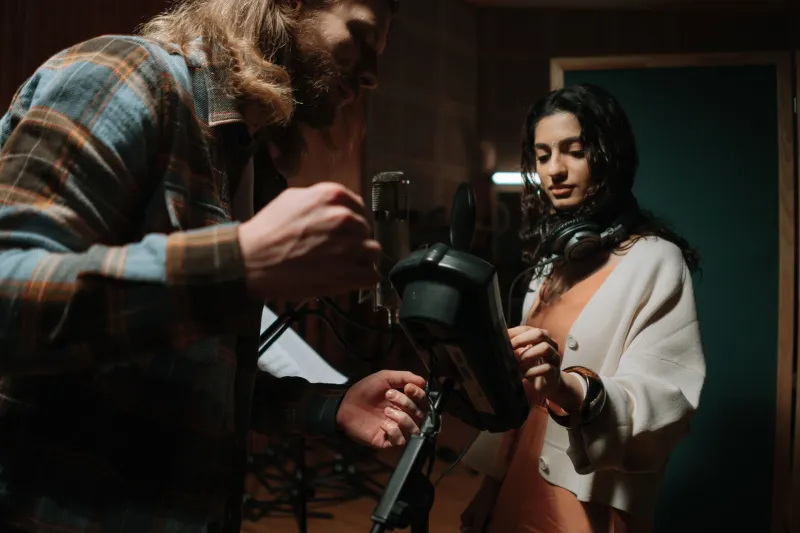
There's a particular kind of British fallout that doesn't announce itself. No screaming row, no dramatic press statement, no public airing of grievances. Just a gradual cooling — fewer replies, a feature that never materialises, a joint project quietly removed from someone's bio. And then, months later, a journalist asks about it and both parties say some version of "we're still mates, just doing our own thing" while clearly meaning the opposite.
This is how a lot of UK creative collaborations die. Not with a bang, but with a very polite, very British whimper.
It'd be easy to write this off as just the music industry being the music industry — ego-driven, commercially ruthless, full of people who are fundamentally competing even when they're pretending to cooperate. But there's something more specifically British happening here. Something about the way we're conditioned to handle creative conflict that makes genuine, lasting partnerships harder to hold together than they should be.
The Solo Artist Myth
A significant part of the problem starts before any collaboration even gets off the ground. The way British artists are developed — particularly in the streaming era — is almost entirely built around the solo identity. Your brand, your aesthetic, your sound, your story. From the first moment someone starts building an audience, the infrastructure around them is designed for one name at the top of the poster.
That's not inherently a bad thing. But it does mean that when two artists with strong individual identities try to build something together, they're essentially asking two fully-formed egos to share a space that was never designed for two. The industry has no real template for it. Splits on songwriting credits, revenue shares, creative decision-making — none of it is discussed upfront because nobody wants to be the person who brings money into a vibe. And in British culture especially, talking about money before the relationship has even proven itself feels almost rude.
So the awkward conversation gets deferred. And deferred. Until eventually the collaboration is successful enough that the awkward conversation becomes a devastating one.
Politeness as a Pressure Cooker
Here's the thing about British politeness in creative settings: it doesn't actually resolve tension. It just stores it.
In a lot of other creative cultures — American hip-hop being the obvious example — disagreement tends to get externalised. It's loud, sometimes messy, occasionally ends up on wax. But the conflict is visible, which means it can actually be dealt with. British artists, by contrast, tend to internalise. You don't tell your collaborator that you think they're taking too much credit for a track you largely produced. You just quietly seethe about it at the next session. Then the next one. Until eventually you stop booking sessions at all and explain it away as "creative differences."
This isn't a character flaw unique to musicians. It's deeply embedded in how we're taught to handle interpersonal conflict in this country — avoid direct confrontation, don't make it weird, keep things surface-level pleasant even when they're fundamentally broken. In most areas of life, that's mildly dysfunctional. In a creative partnership that depends on radical honesty, it's fatal.
When the Algorithms Stopped Being Fair
There's also a more contemporary pressure that's making things worse: the way streaming and social media have made individual visibility feel zero-sum.
Ten years ago, a successful collaboration might have genuinely lifted both artists equally. A joint project, a shared tour, a well-received EP — the rising tide raising both boats. But in an attention economy where the algorithm is constantly deciding who gets pushed and who gets buried, collaborative success doesn't always translate into shared momentum. One artist's profile spikes; the other's plateaus. The one whose numbers didn't move starts to wonder whether they gave more than they got. The one whose profile grew gets protective of it.
You can feel this tension in the way UK artists talk about features now. There's a constant, barely-concealed calculation happening — is this person's audience going to convert for me? Is this feature going to help or hurt my brand positioning? What started as a genuine creative impulse gets filtered through commercial anxiety before it even reaches the studio. And when both parties are doing that calculation simultaneously, you're not really collaborating. You're networking with extra steps.
The Credit Problem Nobody Talks About
If there's one issue that quietly destroys more British creative partnerships than any other, it's credit — specifically, who gets it and how it's distributed.
The music industry has always had a complicated relationship with acknowledging behind-the-scenes contributions. Producers who wrote half a song getting a fraction of the recognition. Co-writers whose names appear in the small print while the frontperson does the interviews. In a solo context, these imbalances are frustrating but navigable. In a collaboration between equals, they become genuinely destabilising.
British artists are also, it has to be said, particularly susceptible to a certain kind of subtle credit-grabbing — the interview answer that slightly overstates your contribution, the social post that foregrounds your name, the narrative that gets built over time where the collaboration was really your vision that someone else helped execute. None of it is usually malicious. It's just the natural result of individuals trying to build their own stories in an industry that rewards clear, simple personal narratives.
But the person on the other end of that notices. They always notice.
Can It Actually Be Fixed?
Probably not at the industry level — at least not quickly. The structures that encourage solo-first thinking are too deeply embedded, and the commercial pressures that make collaboration feel risky aren't going anywhere.
But at the individual level? There are things that help. The UK artists who do manage to sustain meaningful creative partnerships — and there are some — tend to share a few things in common. They had the uncomfortable conversations early. They agreed on credit and money before the project had any value, which made the conversation easier. And crucially, they built relationships where honesty was more normal than politeness — where saying "I don't think that works" wasn't a threat to the dynamic but just part of how they operated.
That last one is the hardest. Because it requires overriding something that's been trained into most of us since childhood — the instinct to keep things pleasant, to not rock the boat, to let small resentments accumulate rather than risk an awkward moment.
British creative culture produces extraordinary individual talent. What it hasn't quite figured out yet is how to make space for two extraordinary individual talents to genuinely share something — without one of them quietly, politely, very British-ly deciding they'd rather just do it alone.