Less Is More: The UK Artists Winning by Keeping You Waiting

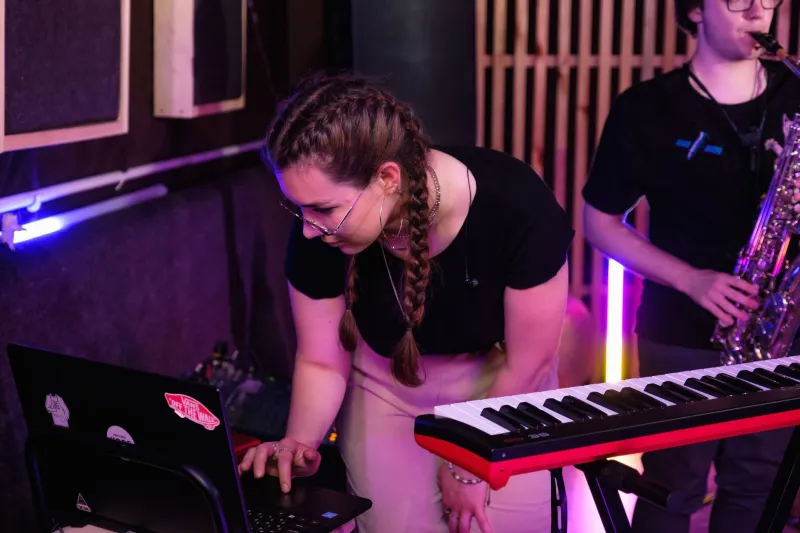
Photo: Alexboaca1, CC BY-SA 4.0, via Wikimedia Commons
Everyone's shouting. Every day, another drop. Another single, another snippet, another reel of an artist pointing at text floating across their face. The content machine doesn't sleep, and for the past few years, British artists have been told — by labels, by managers, by every social media guru with a Linktree — that the only way to stay relevant is to stay visible.
But something's shifting. Quietly, almost defiantly, a strand of UK music culture is pushing back. And the artists doing it aren't struggling — they're thriving.
The Noise Problem Nobody's Talking About
Britain has always been good at producing culture faster than the world can absorb it. Grime, UK garage, jungle, drill — scenes that moved at a pace that felt electric precisely because they were dense, urgent, and alive. But there's a difference between a scene generating heat organically and individual artists being pressured to post three times a day just to keep the algorithm fed.
The result of that pressure is a kind of creative white noise. When everyone is releasing constantly, nothing lands with any real weight. Listeners scroll past. Playlists fill up. And the artist who spent three months on a track watches it rack up four thousand streams before disappearing entirely.
Some British artists looked at that landscape and decided to play a completely different game.
Scarcity as Strategy
There's a producer based in South London — you won't find him on TikTok, and his Instagram hasn't been updated in eight months — who releases maybe two projects a year. Each one drops without a press cycle, without a countdown, without a campaign. Just a link shared in a private Discord server and a few WhatsApp groups. Within hours, those links are everywhere. Music forums, Twitter threads, YouTube reposts. The scarcity does the marketing for him.
This isn't an isolated case. Across UK music, from bedroom producers to mid-level indie acts to artists with genuine mainstream profiles, there's a growing understanding that withholding can be more powerful than broadcasting.
It's not laziness. It's not a lack of output. It's a deliberate architecture of anticipation.
The Underground Community Play
What makes this strategy work isn't just releasing less — it's where artists are choosing to exist in between releases. Private Discord servers, Telegram channels, Substack newsletters, Bandcamp subscriber tiers. These aren't just platforms; they're ecosystems.
When an artist builds a genuine community in a space the algorithm can't easily monetise or disrupt, something interesting happens. The fanbase becomes protective of it. They feel ownership. They're not passive consumers scrolling a feed — they're participants in something that feels exclusive, almost secret.
That dynamic creates a different kind of loyalty. Not the fleeting attention of a viral moment, but the sustained investment of people who feel like insiders. When a release finally drops into that community, it doesn't need a campaign. The community becomes the campaign.
Quality Over Quantity — But Make It Intentional
There's a version of this conversation that gets lazy and just says "focus on quality, not quantity" — as if that's a revelation. But the artists doing this well aren't just making better music. They're being intentional about the experience of receiving that music.
Think about the last time a record genuinely surprised you. Not because it was sonically unexpected, but because you didn't see it coming at all. No teaser clips, no cryptic Instagram posts, no "something's coming" energy. It just arrived. And because you weren't primed to receive it, you actually listened to it.
That experience is increasingly rare, and rarity makes it valuable. British artists who've mastered the art of the unexpected drop — the ones who go quiet for months and then appear with something fully formed — tend to generate a disproportionate amount of conversation relative to their profile size.
The Business Case for Silence
Here's where it gets interesting from a commercial standpoint. Conventional music industry logic says more releases equal more streaming revenue, more playlist pitches, more algorithmic touchpoints. And that's true, up to a point. But it's also a treadmill with no finish line.
The artists building sustainable careers on scarcity are often doing it through direct-to-fan models that bypass streaming entirely. Limited vinyl runs that sell out in hours. Exclusive merchandise tied to a release that you can only access if you're in the right community. Live shows that feel genuinely special because they don't happen every other weekend.
The maths is different when you're not chasing streams. A thousand deeply committed fans who've bought your record, your merch, and your concert ticket are worth more — financially and culturally — than a hundred thousand passive listeners who've half-heard your single on a playlist.
This isn't a new idea, but the tools available to British artists now make it more viable than it's ever been. The infrastructure for running a small, devoted fanbase has never been more accessible or more affordable.
Mystery as a Cultural Stance
Beyond the business logic, there's something culturally significant about what these artists are doing. In a media environment that demands total transparency — where artists are expected to share their process, their struggles, their therapy sessions — choosing mystery is almost a radical act.
Some of the most enduring figures in British music have always understood this. The mystique around certain acts isn't accidental; it's cultivated. You don't know everything about them, and that gap between what you know and what you imagine is where fascination lives.
Younger UK artists are starting to reclaim that space. Not through pretension or manufactured enigma, but through a genuine understanding that oversharing diminishes the art. When you know everything about how a song was made, where the artist was emotionally when they wrote it, and what they had for breakfast that morning — the song loses a layer of its power.
Withholding isn't dishonesty. It's respect for the listener's imagination.
The Long Game
None of this is to say that the constant-content model is wrong for everyone. For certain artists, in certain genres, with certain audiences, it works brilliantly. The landscape is wide enough for multiple strategies to coexist.
But for British artists who feel ground down by the demand to always be on — who've noticed that their most carefully crafted work gets less attention than a throwaway clip filmed on a phone — there's a genuine alternative worth considering.
Silence, used well, is a sound of its own. And right now, in a world drowning in content, it might be the loudest thing you can make.