The Admin Always Wins: How British Musicians Became Their Own Worst Bosses
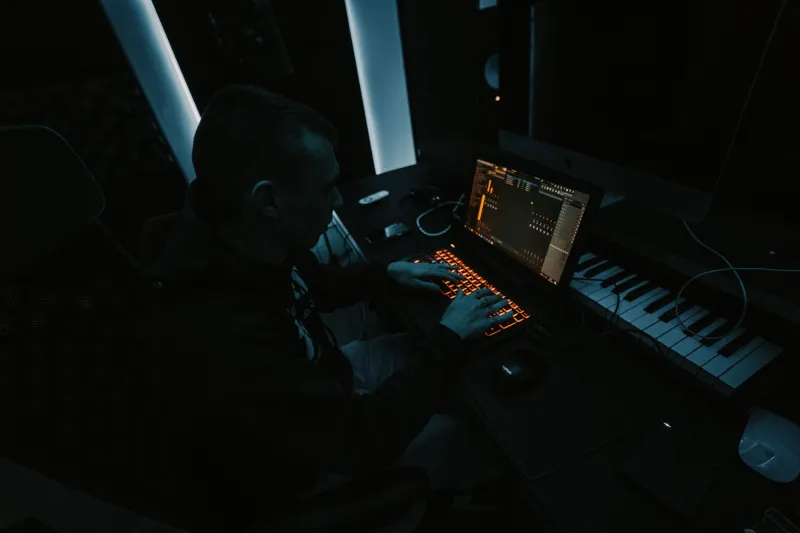
There's a version of this story that sounds almost inspiring. The scrappy independent artist, laptop open at the kitchen table, juggling Spotify for Artists with a half-finished track in Ableton, firing off emails between sessions, running their own socials, booking their own tours. Self-sufficient. In control. Owning the whole pipeline.
Then there's the real version. The one where a genuinely talented songwriter from Wolverhampton hasn't written anything in three weeks because they've been trying to sort out a PRS dispute. Where a producer from South London is losing sleep not over their sound but over whether their LLC is set up correctly. Where the creative work — the actual reason any of this started — has become the thing that gets squeezed into whatever time is left over.
British musicians are running management companies. Most of them didn't choose to. They just had no other option.
The Gap Nobody Talks About
Here's the uncomfortable truth sitting at the centre of the UK music industry: the infrastructure that used to support emerging artists has largely evaporated, and nobody's replaced it. Traditional management deals — where a manager takes a cut in exchange for handling the business side of a career — still exist, but they're increasingly reserved for artists who've already proven commercial traction. If you're still building, still growing, still unproven by the metrics that matter to industry gatekeepers, you're largely on your own.
Label advances? Shrinking. Meaningful A&R investment in development? Rare. Management willing to take a punt on an unestablished act? Even rarer. The result is a generation of UK artists who've had to absorb an enormous range of non-creative responsibilities just to keep the lights on.
We're talking about booking agents, social media managers, publicists, accountants, licensing negotiators, and tour coordinators — roles that, in previous eras, would have been distributed across a small team. Now, more often than not, they collapse into one person. The artist.
Talented Doesn't Mean Organised
This is where it gets genuinely damaging. The skill set required to make compelling music and the skill set required to run a small business are not the same thing. They're not even particularly adjacent. And yet the industry has quietly decided that artists who can't manage both simultaneously don't deserve to progress.
The cruelest part? The people who thrive in this environment aren't necessarily the most talented. They're the most administratively resilient. The ones who can tolerate inbox management. The ones who don't spiral when a venue ghosts them three days before a show. The ones with enough middle-class buffer — parental support, a savings cushion, a partner with a stable income — to absorb the unpredictability without collapsing.
Talent, in this model, becomes almost secondary. What selects for success is tolerance for chaos and capacity for bureaucracy. That's a grim filter to run an art form through.
The Emotional Arithmetic
Spend any time talking to working musicians in the UK — not the ones with major label support, just the ones grinding through the mid-tier — and a pattern emerges. The emotional cost of self-management isn't just about time. It's about headspace.
Creativity requires a particular kind of mental availability. You need to be able to drift, to be unproductive in ways that eventually produce something, to follow instincts without immediately auditing them for commercial viability. That's almost impossible when the same brain is also tracking whether a sync licence payment has cleared or calculating whether a run of dates actually breaks even.
Artists describe a kind of cognitive fragmentation — the feeling of being perpetually split between two versions of themselves that can't quite coexist. The creative self and the business self are in constant competition for the same limited attention. Usually, the business self wins, because the consequences of ignoring it are immediate and financial. The cost to the creative work is slower, harder to quantify, and easier to dismiss right up until the moment it isn't.
Who's Actually Benefiting From This?
It's worth asking who this arrangement serves. Because while artists are absorbing all this additional labour, someone else is still taking a percentage. Streaming platforms collect their margins. Distributors take their cut. Sync libraries clip their fee. The business infrastructure around music continues to profit — it's just shifted the operational burden onto the people with the least leverage.
There's also a gatekeeping function happening here that doesn't get named often enough. The artists who successfully navigate self-management tend to be the ones with existing access to knowledge — people who grew up around the industry, who went to music business courses, who have social networks that include lawyers and accountants and people who've done it before. Working-class artists from communities without those connections are disproportionately lost to the admin.
The music that doesn't get made because someone couldn't figure out how to register their publishing rights is invisible. We never hear it. We just notice, vaguely, that certain voices seem underrepresented, and we reach for cultural explanations when the real answer is structural.
Some Are Finding Ways Through
It's not entirely bleak. Collectives have emerged — particularly in cities like Manchester, Bristol, and Birmingham — where artists pool resources and share administrative knowledge. One person handles social strategy for the group. Another navigates the PRS paperwork. There's something genuinely encouraging about the mutual aid logic at work there.
Organisations like the Musicians' Union have expanded their resources for independent artists, and a growing number of music business graduates are offering fractional management services — essentially renting out their expertise to multiple artists at once rather than committing exclusively to one. It's a model that's starting to make sense for both sides.
Platforms have also gotten slightly better. Distrokid, TuneCore, and their competitors have built more intuitive dashboards. Spotify for Artists gives more data than it used to. The tools are better. But tools aren't the same as support, and data literacy isn't the same as having someone in your corner.
The Career That Shouldn't Require a Business Degree
The broader question is whether the UK music industry is comfortable with a system that effectively requires its artists to become entrepreneurs before they're allowed to be artists. Because that's the current arrangement, and it's producing predictable results: burnout, creative stagnation, and a steady exodus of talented people who decide, quietly and without fanfare, that it's just not worth it.
The ones who stay often do so at significant personal cost. The ones who leave take their music with them, unmade.
British music has always punched above its weight globally. But that reputation was built on a foundation of creative risk-taking, of artists who had enough support — formal or informal — to focus on making something extraordinary. That foundation is crumbling, one unanswered invoice at a time.
Somewhere, right now, someone with a genuinely remarkable voice is trying to work out VAT returns instead of writing songs. The industry built this problem. It'd be nice if the industry helped solve it.