After the Algorithm: Why British Artists Are Done Betting Everything on TikTok
For a while there, it felt like TikTok had cracked the code. Unknown bedroom producers were racking up millions of views overnight. A fifteen-second clip could launch a career that a decade of gigging might never have managed. British artists — from soul singers in Sheffield to drill producers in South London — threw themselves into the platform with a kind of desperate optimism. And fair enough. It worked, for some of them.
But something has shifted. Quietly, almost without announcement, a significant chunk of the UK's most switched-on independent artists have started asking a question that sounds almost quaint in 2024: what happens if it disappears tomorrow?
Given the political turbulence around TikTok's ownership and its ongoing regulatory battles — not just in the US but increasingly scrutinised here in the UK too — that question isn't hypothetical. It's urgent. And the artists who saw it coming are already several steps ahead.
The Penny Drops
The uncomfortable truth about building a fanbase on any algorithmic platform is that you don't actually own any of it. Your 200,000 TikTok followers? They belong to TikTok. The moment the platform changes its algorithm — or worse, gets banned or sold off into some unusable shell — you're starting from scratch. No contact list. No direct line. Nothing.
This isn't a new lesson, technically. MySpace taught it to an entire generation of bands who watched their carefully cultivated pages vanish overnight. But there's something about the sheer speed and scale of TikTok that made artists forget the fundamentals. When a video blows up, it feels like you've made it. The numbers are intoxicating. The idea that you might be building on sand is easy to ignore when the sand keeps glittering.
Then the conversation starts to shift. You hear about artists losing access to their accounts for unexplained reasons. You watch reach crater after an algorithm update. You notice that the same video format that worked six months ago now gets buried. And slowly, the penny drops.
Email Is Having Its Moment (Again)
It sounds almost embarrassingly unglamorous, but email lists are making a serious comeback among UK independent artists. Not the corporate newsletter kind — not the generic "here's what I've been up to" blasts that land in the promotions tab and die there — but genuine, personal correspondence between artists and the people who actually care about their work.
Artists like Greentea Peng, who built her following through a fierce sense of community before major label interest came calling, have long understood that intimacy scales differently than virality. A smaller email list of genuinely engaged fans is worth more than a million passive followers who scrolled past your video while waiting for the bus.
Some artists are using platforms like Substack to make this feel less transactional — blending personal essays, behind-the-scenes content, and early music access into something that fans actually want to open. Others are keeping it even simpler: a basic mailing list, a monthly update, a sense that the person on the other end is talking to you rather than at you.
The key shift is ownership. When someone hands over their email address, that's a direct relationship. No algorithm decides whether your message gets seen. No platform can take it away.
Discord, Patreon, and the Rise of the Inner Circle
Beyond email, Discord has quietly become one of the most interesting spaces in British music fandom. What started as a tool for gamers has evolved into something genuinely useful for artists who want to build tight-knit communities around their work.
The appeal is obvious once you think about it. A Discord server is essentially a private club — a space where your most dedicated fans can gather, chat, share, and feel like they're part of something. Artists can drop exclusive snippets, host listening parties, ask for feedback on new material, or simply hang out in a way that feels impossible on a platform as vast and impersonal as TikTok.
Coupled with Patreon — where fans pay a monthly subscription for tiered access to content, early releases, or direct interaction — this model creates something that platforms simply can't replicate: genuine financial and emotional investment from fans who feel like stakeholders rather than passive consumers.
It's not a path to viral fame. But it might be a path to something more durable.
Getting Back in the Room
And then there's the oldest trick in the book. Live music.
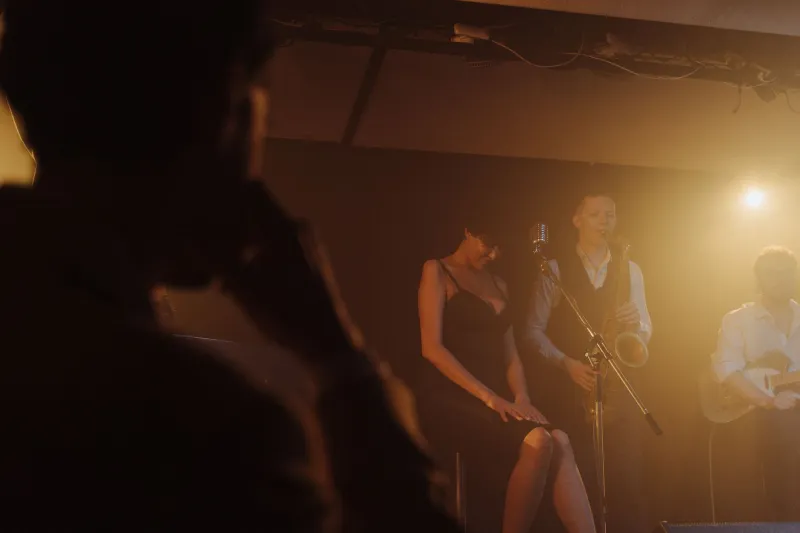
There's a growing movement among UK independent artists to treat live shows not as promotional tools for their streaming numbers, but as the main event — the irreplaceable thing that no algorithm can replicate or take away. Intimate venue tours. House shows. Ticketed listening events in unusual spaces. The kind of experience that doesn't translate to a fifteen-second clip, which is precisely the point.
When you're in a room with a hundred people who paid to be there, who knew your name before the ticket went on sale, who sing the words back to you — that's a fanbase. Not a follower count. Not a metric. An actual human relationship between an artist and their audience.
Several UK artists have spoken openly about deliberately keeping their touring model small and sustainable, prioritising depth over breadth. Playing the same city multiple times to the same core audience rather than chasing bigger rooms they can't fill. It looks counterintuitive from the outside. From the inside, it builds something real.
What the Industry Is Finally Learning
The music industry has spent the better part of a decade telling artists to go viral or go home. TikTok was the pinnacle of that logic — a platform so optimised for discovery that it made traditional A&R feel obsolete. Why develop an artist over years when an algorithm could do it overnight?
But the cracks are showing. The artists who went viral and then had nothing underneath the numbers — no community, no direct relationship with fans, no touring base — found that fame without foundation doesn't sustain a career. The streams plateau. The algorithm moves on. And you're left wondering what you actually built.
The artists quietly diversifying right now — building email lists, nurturing Discord communities, investing in live experiences — aren't doing it because they've given up on reach. They're doing it because they understand that reach without relationship is just noise.
TikTok may or may not survive the next few years in its current form. The algorithm will definitely keep changing. But a fan who gave you their email address, who pays a fiver a month on Patreon, who drove two hours to see you play a 200-capacity venue in Leeds — that's yours. No platform can take it.
In an industry that spent years chasing the next big thing, that might be the most radical idea of all: build something that lasts.