The 23:14 Curfew: How Britain’s Timetables Became the Real Headline Act
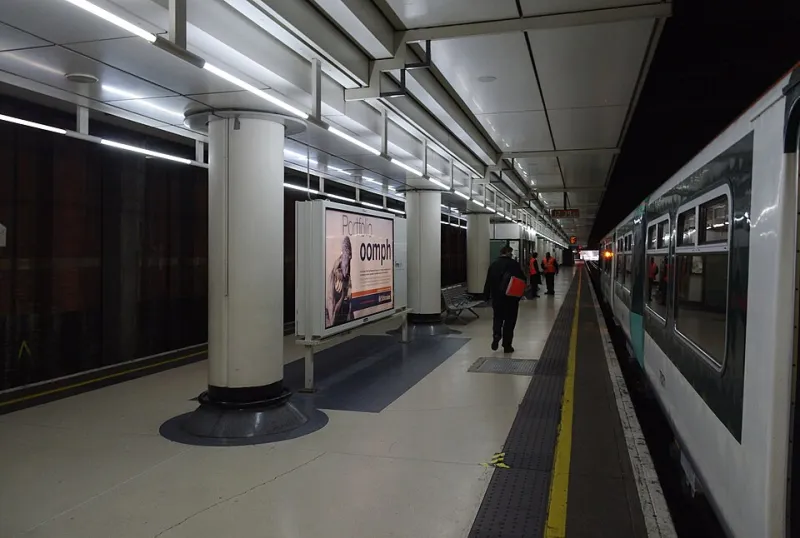
Photo: mattbuck (category), CC BY-SA 3.0, via Wikimedia Commons
It is 22:48 in Leeds and the headliner has not started. The room is full, the bar is doing steady business, and the promoter is doing the maths that has quietly become the most important maths in British live music: if the band goes on now, plays for seventy minutes, and leaves fifteen minutes for the encore, can anyone get home? The last train to Sheffield is at 23:14. The last bus is earlier. The venue curfew is half past eleven. The show, in other words, has already been booked by the timetable.
We talk about live music as if it is shaped by taste, hype and the size of the room. In 2026 it is just as shaped by the journey home. Rail timetables, bus cuts, licensing curfews, taxi prices and the location of the nearest station are not background details. They are an invisible booking agent, and they are getting more powerful.
The journey home is the set time
Promoters do not start with the headline slot and work outwards. They start with the last realistic departure and work backwards. A 23:14 train means a 21:45 headliner. That means a 20:45 support, 20:00 doors, and a soundcheck squeezed into the gap between load-in and the first punters. The encore stops being a celebration and becomes a risk assessment.
London has the Night Tube on some lines, but most of Britain does not. In cities with late services, a 23:00 headline is normal. In towns with one last bus and no night service, the same bill becomes a logistical puzzle. The result is not just earlier shows. It is a different kind of show: tighter, more expensive to get home from, and less forgiving of the fan who has work on Saturday.
The towns that fall off the routing map
Touring routes are drawn by rail lines and bus routes as much as by venue capacity. A Bristol-to-Norwich run looks fine on a map and impossible on a Sunday. A midweek date in a town with no late bus can work for the band and fail for the audience. Bus cuts have made this worse. A venue can have a great room, a willing promoter and a hungry crowd, but if the last connection leaves before the headliner, the crowd stays home.
This is how whole areas become drive-through dates. The artist plays the city, sells the merch, and leaves. The surrounding towns get the reputation of not supporting live music when the truth is simpler and harder: the transport did not support them. Van hire, fuel, parking and clean air zones add to the cost of the journey, but the passenger timetable decides whether the audience can arrive at all.
Curfews are not just noise complaints
Venue curfews get blamed on killjoy councils, but they are often about staffing, neighbours and the last bus. A 23:00 curfew in a residential area is not the same as a 23:00 curfew in a city centre. The show is designed around the exit. If the last train is at 23:00 and the venue is fifteen minutes from the station, the headliner has to finish at 22:30. That is not an artistic choice. It is a calculation.
Some promoters have got good at this. They programme shorter sets, put the support on earlier, and tell the audience plainly when the last train goes. Others have stopped booking certain nights altogether. The invisible booking agent does not negotiate. It just removes options.
Who loses out
The obvious losers are fans on lower incomes, disabled fans who need step-free routes and predictable transport, younger fans, and anyone who does not live in a city centre. The less obvious losers are the artists. The encore is often where the merch money happens. Cut the encore and you cut the margin. Cut the margin and the tour gets harder to justify.
Support acts lose too. If the headliner has to be off by 22:30, the support slot shrinks. New artists get less time to win a room. The infrastructure does not just shape the headliner’s set. It shapes who gets a chance to become a headliner.
The early-show experiment
Some promoters are trying matinees, early doors and train-friendly billing. A few venues are talking to transport authorities about later buses and shuttle services. These are good experiments, but they are exceptions. The live sector still tends to treat transport as someone else’s problem, and transport authorities still tend to treat nightlife as someone else’s economy.
That has to change. If the last train is the headliner, then the people who book the shows need to be in the same room as the people who run the trains. Otherwise the map of British live music will keep shrinking to the places where the last service leaves late enough.
The gig is not just what happens on stage. It is whether the audience can get there, and whether they can get home. In 2026, that is the headline act nobody booked.