Needle Drop, Flat White: What Britain's Listening Bars Are Really Selling
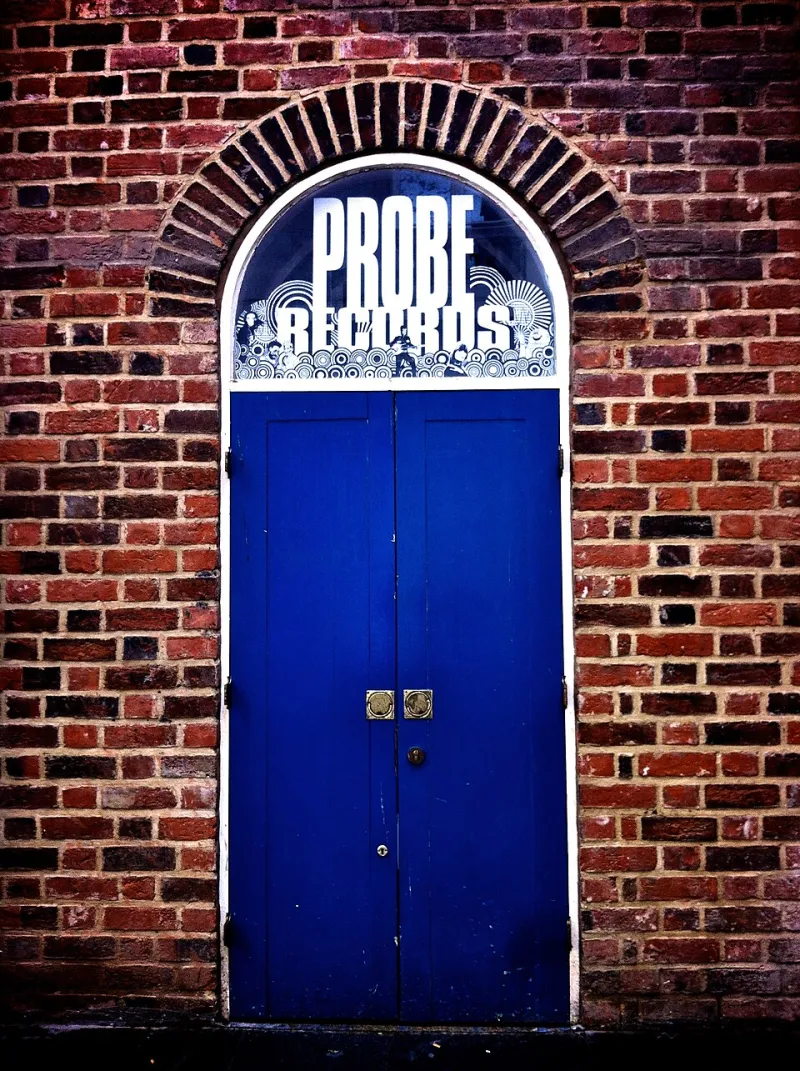
Photo: Jan Hammershaug, CC BY 2.0, via Wikimedia Commons
It's half three on a Saturday and there's a queue on the pavement outside a record shop that, by the old rules, should have shut years ago. Inside, almost nobody is browsing. Half the room is sat down, holding a coffee that cost more than the last album they bought, listening to someone explain why track four is the one that matters. The records are still there, still priced, still alphabetised. They're just no longer the point.
That's the listening bar in a nutshell. The shop didn't stop being a shop. It stopped pretending that a room full of stock was worth more than a room full of people.
The shop that quietly became a room
Walk into a decent one and you'll notice the same pieces: a serious turntable, speakers that have clearly been chosen by someone with opinions, a counter that sells something warm, and lighting low enough that you'd feel daft scrolling your phone. Maybe a shelf of staff picks. Maybe a sign asking you to keep the noise down, which is either the most considerate thing in British retail or the most precious, depending on your mood.
The model is borrowed from Japan by way of a handful of London rooms that made it look easy — a proper system, a proper host, a short menu — and it's now turning up in Sheffield, Leeds, Glasgow, Bristol and plenty of places that would bristle at being called the next anything. The logic is simple enough. A record is a £28 decision you make once. A coffee is a £3.80 decision you make weekly. One of those pays the electricity.
Browsing became a luxury nobody can afford
Here's the part the industry doesn't love admitting. Casual browsing died quietly. Rents went up, business rates didn't go down, and streaming took the impulse out of the purchase. When a customer walks in knowing exactly what they want because an algorithm told them, the shop becomes a vending machine with better wallpaper — and vending machines don't need staff, atmosphere or a lease on a nice old building.
So the shop sells time instead. It sells an hour in a room where music is the loudest thing in it. That's a genuinely scarce commodity in 2026, and it's also — this is the uncomfortable bit — something people will pay a premium for precisely because it's scarce.
Curation is the whole product, and most people get it wrong
The difference between a listening bar that works and one that doesn't has almost nothing to do with the speakers. It's the person choosing the records.
A good host doesn't play their collection at you. They read a room, they vary tempo, they know when to go strange and when to give people something they can hum on the way home. They don't announce themselves every ten minutes. They keep the volume where a conversation is possible but not comfortable, which is the entire trick.
Get it wrong and you've built a café with an expensive stereo and a membership scheme. Get it right and you've built the thing every city says it wants and rarely funds: a third place. Not home, not work, not a wetherspoons with a sticky floor — a room you can be alone in without being lonely.
Then there's the price of the pint
This is where the goodwill gets tested. A flat white and a pastry twice a week is a habit. A £7 pint, a £12 cocktail and a £15 ticketed listening session is a lifestyle, and lifestyles have a way of selecting for a very specific customer — usually one who already owns the records.
Which raises the obvious question. If a shop starts charging entry-level prices for a middle-class evening, is it serving the scene it came from, or is it curating the scene's aesthetic for people who arrived late? A listening bar can be a lifeline. It can also be a showroom where local music culture becomes decor, playing quietly while somebody discusses a mortgage.
The honest answer is that both things happen, often in the same room on the same night. The tell is what the venue does on a Tuesday afternoon in February when there is no launch party and no one posting about it.
What separates a lifeline from a rebrand
A few practical markers, none of them glamorous.
- Free or near-free daytime programming. A Sunday listening session with no ticket, no minimum spend and no guest list is community work. It also costs money, which is why it's rare.
- The cheap option stays on the menu. Filter coffee. A can. Tap water that's actually offered.
- The second-hand bins survive. If the shop only stocks new vinyl at premium prices, it's a boutique with a turntable.
- Staff get paid properly. A venue that runs on enthusiasm burns out the exact people who make it good.
- The door stays open past the playlist. Late-night sessions, album launches, local radio takeovers, a night curated by someone who isn't the owner.
The verdict, more or less
Nobody should be sentimental about the old model. It was failing. A shop that survives by becoming a room is still a shop that survives, and the alternative — another set of shutters on a high street that's already lost its bank, its pub and its bus route — is worse for everyone.
But a listening bar isn't automatically culture. Culture is the bit where the door is low enough for a nineteen-year-old with £6 in their pocket to walk in, sit down, hear something that rearranges their week, and come back. If the room can hold that as well as it holds the coffee machine, Britain has genuinely found a new way to keep its music spaces alive. If it can't, we've just built a very nice lobby for a scene that's quietly moved on without us.
Either way, buy a record on your way out. It's still the cheapest way to say thank you.