The Two O'Clock Encore: What Britain's Afternoon Gigs Are Telling Us
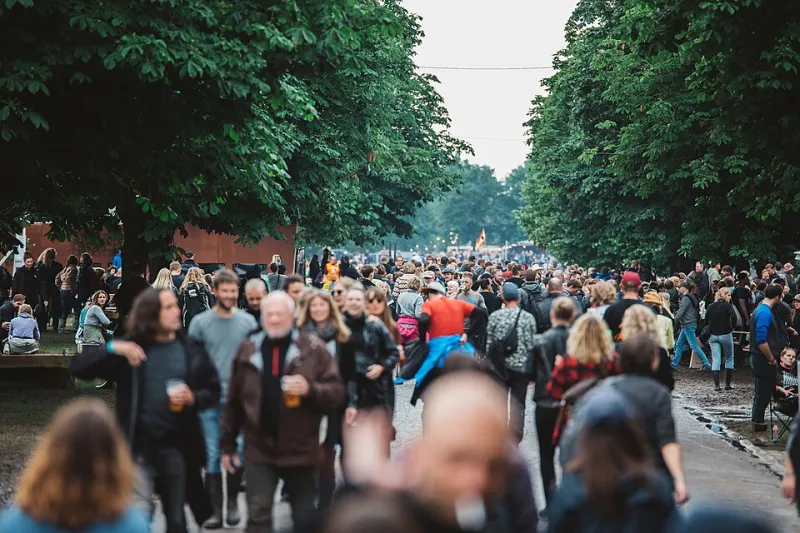
Photo: Krists Luhaers, CC BY 2.0, via Wikimedia Commons
The first time I went to a matinee gig in a proper venue, I spent the whole first song confused. Daylight coming through the fire doors. A bar doing a steady trade in tea. A crowd of about ninety people who all seemed to know each other. Doors at two, headline at half four, out by six, home before the football results.
Honestly? It was great. And that's exactly what worries me.
Doors at two, done by six
Afternoon and early-evening shows have been creeping across the UK for a while now — the weekend all-dayer, the Sunday 4pm set, the 6:30 doors / 9pm curfew model that's becoming standard for mid-level touring acts. They're not a novelty format anymore. They're a scheduling decision a lot of artists and promoters are making on purpose.
Ask anyone involved and you'll get the same list of reasons, most of them entirely reasonable.
Nights got expensive; mornings got real
The last train. That's the whole argument, really. If you live outside a city with a decent night bus and the headline doesn't go on until ten past ten, you're already doing sums about a £60 taxi or a £90 hotel. Add a ticketing fee, a £7.20 pint and a burger on the way home and a night out has become a genuine financial event, not a casual Thursday.
Then there's everything else. Accessibility for people who can't do dark, loud and packed — chronic illness, neurodivergence, sensory stuff, a body that's had enough. Caring responsibilities that don't care about your gig calendar. Shift work. Being over thirty and not wanting to spend Monday horizontal.
And there's the less discussed one: safety. The walk to the car park, the platform, the taxi rank. Plenty of people have quietly stopped going to late shows for reasons that have nothing to do with the music, and afternoon events give them a door back in.
What the venue gets out of it
This isn't pure altruism, obviously. An afternoon show lets a room sell twice in one day, and the earlier crowd spends differently — more food, more soft drinks, more coffee, fewer shots. Older audiences have more money and less patience for a midnight load-out. A well-run matinee also gets you a different audience entirely: the people who bought the album and wouldn't dream of standing in a basement until 1am.
For smaller venues trying to hold on, that's not a trend. That's a business model.
So is this a correction or a retreat?
The uncomfortable part is separating preference from economics. Both are in the room, and one is doing a lot of the driving.
The case for correction: gigs have drifted later and longer than anyone actually asked for. Doors at 7, two support bands, headline at 9:45, out at 11:15 — that's not a tradition, it's a habit, and a fairly recent one. Moving things earlier isn't a compromise. It's fixing something that was broken.
The case for retreat: if the night out is being quietly repriced out of reach, then afternoon shows aren't a choice so much as an evacuation. And the thing that gets lost first when everything moves to daylight is the late slot — the 10:30 headline where a new band plays to a room of people who will still be talking about it at work on Monday. That's where a lot of British music history was actually written, and it doesn't relocate easily.
There's a third risk, and it's the one that annoys me most. The matinee can become the cheap tier. Lower fee, because it's early. Smaller crew, because it's early. Less production, because it's daylight and nobody expects much. Do that consistently and you've invented a two-tier gig economy where the people with money get the full show at a reasonable hour and everyone else gets a half-lit afternoon with a compromise PA.
The rules that make it work
It's not complicated, it just requires someone to decide not to be tight.
- Pay the same fee. A 4pm set isn't half a gig. Same band, same set, same work.
- Treat it as a show, not a picnic. Lights down, no raffle in the middle, no acoustic set because it's daytime. The audience came for a gig.
- Don't say family friendly unless it is. If there's a bar, a sound level and a two-hour set, be honest about what that means and let people decide.
- 6:30 doors beats 7:30 doors. It's a smaller change than people think and it's the difference between the last train and a £55 cab.
- Keep the late shows alive too. A venue with an afternoon programme and no late programme hasn't solved anything. It's just moved the problem.
The verdict
Afternoon gigs are the best thing to happen to British live music scheduling in years, and that's exactly why we should be suspicious of how quickly they've been adopted. A culture that moves its nights to daylight because a night out has become unaffordable hasn't fixed the night out. It's just found a way around it, quietly, at a profit.
The format itself is fine. Good, even. A 3pm set in a room with light in it can be the best gig of your year and nobody in that room is calling it a compromise. But the reason behind the shift matters as much as the shift. If we're moving gigs to the afternoon because we've remembered that the music is the point and the hour was never the point — brilliant, carry on. If we're doing it because a generation has been priced out of the evening, then the afternoon isn't a correction.
It's a symptom, dressed as a schedule.